Showing posts with label writing. Show all posts

Wednesday, April 15, 2009

In Search of the MacGuffins


The MacGuffin is a phrase coined by director and producer Alfred Hitchcock in a lecture, saying "We have a name in the studio, and we call it the 'MacGuffin.' It is the mechanical element that usually crops up in any story. In crook stories it is almost always the necklace and in spy stories it is most always the papers." The MacGuffin is the driving force of a plot, an object that may be trivial in power, but important to the story.

In the Indiana Jones movie "Raider of the Lost Ark" the Lost Ark is the MacGuffin. Indiana spends most of the movie racing Nazis to the Ark, and tring to stop them from unleashing it. But the Ark itself barely does anything, besides facemelting Nazis. Treasure hunting stories often have some sort of MacGuffin, in the form of an artifact.

MacGuffins are used in literature, too. The Harry Potter series is big on this, as the Sorcerer's Stone is classically MacGuffinal, and the Horcruxes in the seventh book, "Harry Potter and the Deathly Hallows," are the MacGuffin literary technique at it's best. It's a quest to find seven objects, each important only in the fact that they are meant to be destroyed. Harry Potter is successful partly due to its masterful use of prominent literary techniques.

The MacGuffin even appears in texts as old as "Jason and the Argonauts," where Jason is questing for the Golden Fleece. The Golden Fleece itself does nothing, but the fact that Jason is searching for it is the start of all of his adventures.

The MacGuffin is a handy 'plot hook', and you can use it to propel your story with ease. Your adventurers are off to close five dimensional rifts, your spy is meant to capture the intelligence papers of an enemy government, your master thief is attempting to steal a huge diamond. It's not only an involving and classic technique, but a quick'n'easy technique as well; grab a few characters, throw in a MacGuffin and a plot hook and you're ready to go. The MacGuffin is a great technique for beginner and veteran writers.

Tuesday, March 31, 2009

Chekhov's Gun


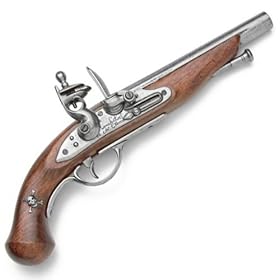
Chekhov's Gun is a literary device, named after the short story writer Anton Chekhov. Chekhov felt that any object put into the story must be used later on, or else there's no point to it. The phrase "Chekhov's Gun" comes from a line from a letter Chekhov sent, "One must not put a loaded rifle on the stage if no one is thinking of firing it."

Chekhov's gun has come to mean a seemingly trivial detail that will be of the utmost importance later on, or an object that the book lingers on just barely, only to later use it to save the day. When properly used, this device can be seen as cunning or inventive, but it can get to predictable levels. In James Bond, for example, all of the gadgets that quartermaster "Q" gives Bond will later be used, with all their described functions, to get Bond out of a specific mess. Due to this happening in every single movie (with the exception of "Goldeneye"), it's become rather stale.

Certain book and TV series are notorious for this; Harry Potter has quite a lot of Chekhov's Guns. In the second book, Dumbledore introduces Fawkes the Phoenix and spends five minutes recounting the many uses of the Phoenix species - heavy lifting, bravery, healing tears - all of which are used in the final scene. Fawkes is something of a Mary Sue that way. Scabbers, Ron's seemingly docile rat, and Dumbledore's "Putter-Outer" are both Chekhov's Guns.

Chekhov's Gun, I find, is best when used in moderation. It's a useful technique, but use it too much and your readers will start poring over every little detail, thinking that everything mentioned will be important later.

Saturday, March 28, 2009

A Death to be Remembered


Just as death is a huge part of human life, death is one of the most important tools in a writer's arsenal. Death can be poignant, epic, sad, happy, climactic, anti-climactic, and everything in between, but most of all, death is strong. A message will resonate if accompanied by a death.

Now, death cannot be casually used. If readers feel that a death is mishandled, they could leave the story with a bad taste in their mouths. A meaningless death of a treasured character will leave your reading audience very unhappy.

For death to have an impact, you have to be connected with the one who died. Introduce a character and kill him off the next page. Who cares about him? But once the audience has gotten to know a character, really started to empathize with him/her, that's when it hurts. The bond with the character leads to grief for his/her death, and if well done, leads to strong storytelling.

Sometimes it's the shock of a sudden death that really hits the reader. An unexpected assassination, a sudden and fatal betrayal, will at first stun the reader, then get them searching through the following pages for answers.

Other times, it's the satisfaction of a death well spent: a sacrifice to hold off the enemies just long enough for allies to escape, or a last stand to decimate the enemy's army. If the character dies doing the right thing, it leaves the reader with a sort of melancholy happiness.

Dying the way the character always wanted to go out can leave the reader feeling satisfied too. A barbarian, convinced that the only way to go to Valhalla is to perish in combat, meets his demise battling to the death. A sailor, lover of his ship and the sea, dies happy along with his trusty vessel, sinking slowly to a watery grave.

Sometimes a poorly handled death can kill a story. I've read stories where the best character, the one that really makes the story work, dies halfway through the novel. The rest of the novel feels hollow and a lot less fun as a result.

A villain can go from unlikable cad to despicable devil by killing a character. Consider it a form of villain forming; nothing says evil like cold blood killing.

Death is a fundamental part of human life, and is also a core device in writing. Use it well and use it smartly, and it could transform your story.

Sunday, February 1, 2009

Licensed Novels

When I say licensed novels, I mean books that make use of an already established world. Star Wars books, Superman books, even Looney Tunes books, they're all licensed novels.

Sometimes licensed novels are surprisingly good, and other times they read like a piece of bad fan-fiction. While conventional books are judged by creativity, licensed novels are judged by their use of the setting. If you're reading a Star Wars book and think "Wow, this really feels like it takes place in the Star Wars universe!" it's a successful licensed novel. If you read a Star Wars book and think "Bogus! A hutt would never act like that!" then the writer did not properly capture the setting, and thus has failed. That writer will get no cookie today.

Books often have tools that other mediums don't. Books can get inside a character's head, something movies fail to do (unless you're watching Alfie). Books can also put in exposition, another something that movies cannot do. This is why there are licensed novels, because sometimes, you just need a book to get the job done.

Tuesday, August 26, 2008

Plagiarism

Originality is what you're striving for. You want people to go, "Wow, I've never considered the idea that moths are aliens sent to slowly deprive the human race of clothing so they freeze to death!" Or something of the sort.

You'll take flack when you do something that isn't original. For example, I'll string up a few striking similarities between Eragon and Star Wars. (note: story spoilers below)

A farmer (Luke Skywalker, Eragon) on the edge of an evil empire (the Empire, the Empire) led by an emperor (Emperor Palpatine, Emperor Galbatorix) lives with his uncle (Owen, Garrow). He is taught by a knight of a long-lost order (Obi-wan Kenobi, Brom) , learning how to move things with his mind (the Force, magic). He must save the princess (Leia, Arya). His trainer knight is slain in a battle with (Darth Vader, the Ra'zac), so he must join the rebels (the Rebel Alliance, the Varden) against the Empire to avenge him.

In the second (book, movie), he meets up with a wise old guru (Yoda, Oromis), learning more of (the Force, magic). In the end, in a showdown with (Darth Vader, Murtagh) it is revealed that he is his (father, half-brother).

So yeah, stealing other writer's work is a bad thing. However, there's a loophole.

If you steal from other authors, you're a dirty idea-stealing weasel. But if you steal from real life events, you're praised!

Now, don't be too blatant with the well-known stuff. No Trojan Horses, or anything. But there's a lot of history to grab on to. The Mongolian Horde, the Trojan War, the Roman Empire. Incorporate some things from them. You'll be a history scholar, and a good writer too! 

Thursday, August 21, 2008

In the beginning

In the beginning, there was nothing.

And then there was literature.

And then God came in at some point, I don't know.

I'm talking about the beginning of your story. The hook of your line and sinker. The first gunshot of your war. The first chord in your symphony.

There are different types of beginnings. There's the "story hook", where something happens that sets the story in motion. Such as, the princess being captured, or someone being murdered. As someone rolls the snowball down the hill, it sets the stage to grow and grow.

Then there's a the character introduction opener. It features one of your main characters showing off his personality, so the reader gets acquainted as soon as possible.

I'll use some examples here. In Indiana Jones, it starts with Indy going on an iconic dungeon crawl. It sets the scene for the rest of the movie, with Indy swinging with his whip and sneaking through traps.

In Lord of the Rings, it starts with some juicy backstory. It tells the story of how the One Ring came into existence, and who we're fighting here, Sauron. A type of opening is something set in the past, explaining something.

Also, who's your audience? Some will want a exciting hook, something to quickly get them interested. Some would like a slow opening that expands the story. You're the caterer, and you need to know whether to serve tiny olives with sticks in them or B-B-Q.

Well, enough with the metaphors. I'm like a semi-automatic machine gun that can't stop rattling off.

Thursday, August 7, 2008

Action scenes

I'm sure you've read both types of books; the books where they sit around talking and nothing ever happens, and the books where there are so many fight scenes it makes you exhausted. In my opinion, there are healthy middle grounds.

Fight scenes should be used to emphasise moments and to move the plot forward. Such as, when our hero escapes from the prison. That's a big moment in the story, and it'll be underlined by the brawling he does to get out.

Also, a lot depends on the genre. If you're doing fantasy, big epic battles aren't mandatory, but they sure don't hurt. In sci-fi, there's a sense of danger, that there are fantastic and wonderous creatures out there and most of them want to kill you. In sci-fi, wars are not neccesary, but make sure the world feels somewhat dangerous.

In mystery, you can very easily go the whole story without any action encounters. But if you're working with something like a murder mystery, it's not so far-fetched that a shoot-out may ensue.

In children's books, go for lots of gore. Guns are A-OK, and make the victims scream "IF ONLY I HAD EATEN MY VEGETABLES!" You'll be a role model.

Wednesday, August 6, 2008

Character interaction

Think in real life; relationships is what it's all about. Your wife, your annoying brother, your slightly stupid best friend, your antagonistic coworker. The driving force of your life, right?

There are two types of stories (well, a lot more than two, actually): story driven and character driven. With story driven, the characters are just there to further the plot. In character driven, the plot's just there to give your characters something to do. It's your job to get something in between.

Think of Lord of the Rings. Merry, Pippin, and Gimli are comic relief. Boromir, Aragorn, and Legolas are the "straight guys", or the guys that keep them in line. Gandalf is the benevolent and powerful leader, who acts as a role model to the Hobbits. Sam and Frodo are best friends, Legolas and Gimli develop an unlikely friendship, Boromir and Aragorn have a rival thing going, Merry and Pippin join the Ents, etc.

Character sub-plots and character development add depth to the story, and character development is best done with other characters. A joker and a monk learn to become friends, the monk lightening up a little and the joker learning that joking doesn't have to be done all the time.

Put a lot of thought into this; who hasn't heard of Sherlock Holmes and Watson, Batman and Robin, Luke Skywalker and Obi-wan Kenobi? Make compelling characters, and compelling interactions between the characters, and the reader will stick around to see what'll happen.

Wednesday, July 30, 2008

Lucky good guys syndrome

A common story mechanism is that the bad guys are much better than the good guys. They have huge castles, or bazookas, or whatever the story calls for, and all the good guys have is that little heartwarming light called hope.

But somehow, through either 
A: the good guy finding a chink in the evil guy's armor, such as an off switch or a literal chink in his armor.
B: the good guy kills him using his environment, EG, in a factory, they fight on a conveyor belt, good guy knocks a vat of glue onto the bad guy, bad guy is stuck going down the conveyor belt to a certain doom.
C: "REINFORCEMENTS HAVE COME, WE'RE SAVED!" (which is always lame)


Of course, the whole reason the good guys are fighting the bad guys is because the bad guys are stronger. It gives the story a challenge. So it's pretty hard to avoid "Lucky good guys syndrome". There are ways, however, but if you can't think of one just make the environment kill (see B) extra cool.

The anti-hero

An anti-hero is a hero with unheroic qualities; such as Batman. Batman undoubtedly does good, as he swoops in and "BOW, WHAP, POK!s" his enemies, but he's got a huge dark side. He dresses as a black bat, will resort to violent torture methods, is occasionally obsessed with his alter-ego. He's been on the other side of the law, if only for a little while.

Anti-heroes are very flawed; it's what they are. They have deep doubts, or deep trauma, and it shows. They either persevere through it and come out a better person, or they fall to the dark. Undoubtedly to come back again, but it's still a story arc.

Anti heroes can be written really well, but it takes some skill to get an anti-hero above adequate. You have to make sure the audience cares about him and wants him to get better, but also have the audience revelling in the drama of his ups and downs.

Don't overdo the anti-hero. There have been a lot of anti-heroes in fiction as of late, and the reader will see right through the anti-hero's typical plotline if you don't stray from it.

I'll put a cliche warning here: ever heard of a good guy going evil, and then the rest of them go "Oh god he's evil now! Come back!" and the previously good but now evil guy goes "I can't." but he's obviously thinking about it, and then at the perfect moment he rebels, and the good guys win?

Avoid that. And other anti-hero cliches you see, for that matter.

My verdict: anti-heroes in moderation.

Tuesday, July 29, 2008

Story setting

Story setting can mean different things, depending on whether your story is set in the real world or a fantasy world. Fantasy worlds need huge, fleshed out settings, sometimes getting pages or a whole book of their own, just explaining it. Real world settings, however, are a lot less work. It's just a matter of picking what'll suit you. Your superheroes will want to live in big cities (because otherwise it's a little boring), your farmer-turned-hero (note: avoid that story line) will live out of town, etc.

However, fantasy worlds are a time consuming and exciting thing. Religion, economy, cities, culture, creatures, geography... It's like you're God, except you have as much time as you want, not seven days.

It's a daunting task, so you'll want to take it one step at a time. Also, will you be building out, such as making a town here, and then drawing roads, forests, etc, until it's a full-fledged map, or building in, making a wide overview and then filling in the details? Both are good, and you may want to experiment with both of them.

What makes your world different? Here you walk a fine line, where you need originality and creativity but it still needs to have ties to the real world, all the better for connecting with the reader. Make a village plagued by dragon attacks, but also make a village plagued by taxes and corruption. Keep it real and keep it fresh, dawg.

I've made a simple checklist, so you know what you have to do (note: for some worlds, not all of the listed things will apply, and the listed things are just the basics, not all you need)

Races: such as humans, elves, dwarves, and trolls, the generic fantasy races.

Geography: this has a large effect on the rest of your world. If it's mountainous, then there won't be many big cities, mostly small villages trying to survive.

Culture: Adds unique flair. This village worships goats. They have annual goat dances. Interesting, no?

Religion: Goes hand-in-hand with culture. Note that nearly all of Earth's civilizations developed religion on their own or with a little help, so make sure to make this a semi-prominent part of your world.

Of course, if you're doing a science fiction story, then you'll have to make tons of different PLANETS. I suggest keeping the planets simple. Like in Star Wars, for example, instead of having varied ecosystems, there are desert planets, forest planets, and volcano planets. This way, each planet is like a region.

Try making maps, with little footnotes, it'll help things along. And remember, have fun with it. I myself find the idea of creating a world intensely fun, but that may just be me.

Your characters

Ok, you've set up a terrific plot, got a setting, and you've got paper and a pencil. What could you need now? Characters.

There's an exercise I'd like you to do, which is writing a sheet on your character. Likes, dislikes, background, looks, attitude, sayings, etc. This is to define your character. I've seen far too many books that make characters who don't have a personality, they just do what the plot calls for. And trust me, character driven stories are far better to read.

For example: you've got a pacifist scientist, who's scrawny and pale. He "abhors violence", as he says. Yet the script calls for a bar fight right now. How will you manage this?

Instead of making the scientist do something out of character, use his character to your advantage. A thug threatens him, he refuses to fight, and he's pushed into a table of bargoers. Ta-da, bar fight.

Also, develop your characters. Usually it's what they lack that they eventually need: to think, to fight, to strip. Whatever the situation calls for. So make it gradual. Let the reader see the development, and make there be a reason (for example, the scientist is being bullied, and he needs to show them what's what). Of course, you could go for a "be yourself" storyline and make the scientist create a Frankenstein to fight for him, which would be in-character. It's your choice.

Monday, July 28, 2008

"Mary Sue"

A "Mary Sue" (a phrase based on a Star Trek fan fiction story poking fun at all the overdone fan fictions) refers to a character who stretches the bounds of believability. A Mary Sue is more powerful than he/she should be, is probably the son of a god or a king, and takes up too much of the story.

A Mary Sue is also nauseatingly cliche, and is generally the best at everything. There are Mary Sue story devices, where a highly unlikely and suspiciously lucky thing happens that takes care of everything.

Like, in Harry Potter and the Chamber of Secrets. Harry, Ron, and Lockhart are down in the sewers. Harry standing at the Basilisk that can kill him with its eyes. Fawkes the Mary Sue phoenix eats his eyes out. Harry is hurt. Fawkes the Mary Sue has healing tears! Harry and friends are stuck in the sewer. Fawkes can carry many times his weight, and flies them out! Yay for Fawkes, right?

Wrong.

Though somehow Harry Potter got away with it (it helped that all it's abilities where mentioned beforehand, so it makes sense to the audience), you probably won't, or rather, shouldn't. Mary Sues hurt the story, and I don't want to catch you using them.

I'll be watching.

Connect with the readers

Ever read a comic or a book and think, "Wow! That's just like -whatshisname-! And this is just like -rememberthattime-!" Well, that's what you're going for, connecting with the reader.

Believability is also a factor here. You've probably heard this before, and if you haven't, read more writing books: humanize your characters. Yes, he's a dragon rider, but he's a dragon rider who has marital troubles, or is plagued by depression, or any of those earthly devices. It makes the reader care about the character.

Some basic pointers

Here's some general advice on comics;

READABLE TEXT: Without readable text, your joke won’t exist. (Well, technically it will, but just as technically as a tree falling in the forest with no one to hear it) Take your time with text, do plain print, and use computer text if you can, unless your handwriting is superb. Also, be careful with those speech bubbles. Put them strategically, not willy-nilly.

BREAK THE MOLD: Or at least change it around a little. Straight man and off-the-wall guy is done a lot, but it doesn’t mean you can’t do it, it just means you have to change things around a little. Leader desperately tries to get his group to stop doing random stuff? Or group tries to get the leader not to lead them into the random stuff?

WORK ON THE ART: Yep, it's true: everyone can draw. (disclaimer: those with no hands may not find the above true) Some have more natural talent than others, but it's a matter of practice. You'll probably find that you can draw in cartoonish styles, but not realistic, or vice versa. If this happens and you really want to use that style, it'll take a lot of willpower from you to work extra hard to get up to par in that drawing style. Or, you can collaborate with a drawer.

PRACTICE: When you first start, chances are that your comics will be, um, not good. So start writing comics, write them often, and maybe show them to family or friends, until you feel secure enough with them to start making some for the world. The internet can be a harsh place, and you don't want to get caught unarmed.

Questions to ask yourself

Here I must do one of the original sins: explain a joke. Or rather, in this case, a comic.
I find that the best way to tell how your comic’s going to be is answering a few questions:

Is your style of drawing realistic, cartoon, or manga (this actually has a big impact. Realistic, not as silly. Cartoon, silly. Manga, can wildly switch between silly and not silly and no one will care because it features long spiky hair)

Does it have a coherent plotline going on? (Penny Arcade, the most popular comic in existence, refers to storylines as “dreaded continuity and try to avoid it. Coherent plotlines are necessary for realistic and manga comics, and cartoon comics can pull it off quite well if they put their minds to it)

Are your jokes for a niche audience? (such as the popular gamer comics, or political comics. Generally, you can pull off a few niche comics if you make sure that it’s funny, just not as much, if someone doesn’t get it, and you don’t do it often)still

Are your comics frequently one slide (often a visual gag with a tagline under it), a three panel (affords some dialogue), or larger? Non-continuity comics often have one slide or three panel comics.

Can you draw well? Guess what, you don’t need to. What you do need is to be able to make recognizable (if not realistic) objects, and have a good grasp for facial expressions. Facial expressions are a must, they add character to your comics. Also, make sure your characters don’t all look the same, it leads to confusion.

Do you use characters when you feel like it, erratically switch between one-panel, three panel and bigger on a whim, and insert continuity stories when you feel like it? That’s fine, it’s a comic for Bob’s sake.

Do you want to commit to a schedule? If you're doing a webcomic or a syndicated comic, you'll have deadlines. You can get away with filler (a short comic or a drawing) instead of your scheduled comic a few times, but your readers will fast lose interest. Also, if you're a new webcomic, you'll want to leave updates at least twice a week. If you feel like that's too strenuous, try writing a lot of comics in advance, at your leisure, and then using them one by one. You'll have leeway that way.

That's some questions to ask yourself. One of the biggest parts of comic is your uniqueness; find it and cherish it.